
PBIS Posters and Behavior-Expectation Signage: What to Print and Where to Put It
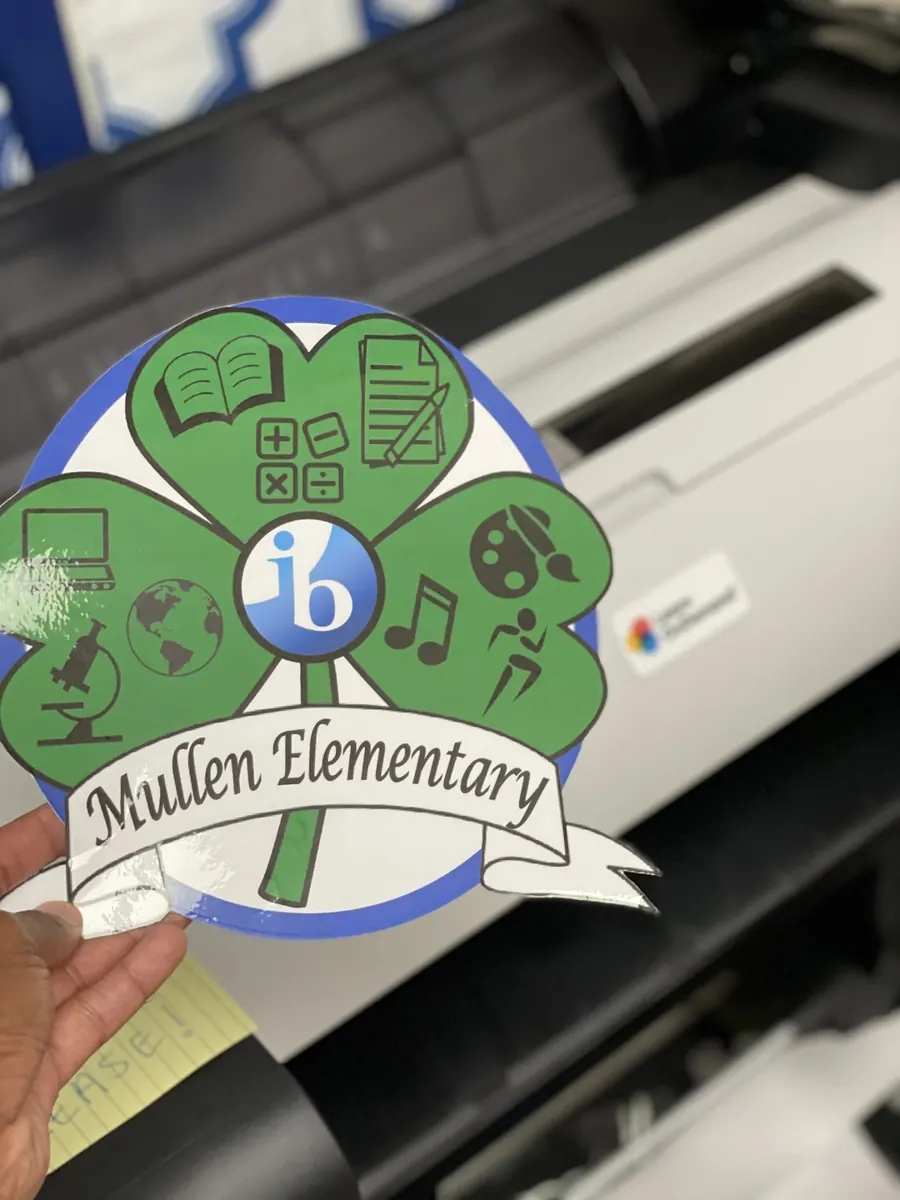
PBIS posters are the visible layer of a behavior framework that is mostly invisible. The teaching, the data, and the team meetings do the work; the signage is what reminds students of the expectations in the moment and place where they apply. Schools that print a matrix for the front office and stop there tend to find the framework fades. This guide covers what to print, where each piece goes, how to design signage that can actually be read, and what to print it on.
What PBIS Is and Why Visual Expectations Matter
Positive Behavioral Interventions and Supports is an evidence-based, tiered framework for supporting students' behavioral, academic, social, emotional, and mental health, maintained by the Center on PBIS, a technical assistance center established by the U.S. Department of Education's Office of Special Education Programs. It operates across three tiers: universal supports for all students, targeted supports for some, and intensive individualized supports for a few.
Tier 1, the universal layer, is where signage belongs. The core of Tier 1 is defining a small set of positively stated schoolwide expectations, teaching them explicitly, acknowledging students who meet them, and posting them as a visual reminder.
Posting matters because the framework depends on consistency. When every adult in the building references the same three or four expectations in the same words, students encounter one standard rather than thirty. Signage is how those words stay in front of everyone, including staff and substitutes. The Center on PBIS describes a fidelity check along these lines: anyone should be able to walk into the school at any time and ask ten random students to name the schoolwide expectations, and at least 80 percent of the time those students should be able to state them and give examples of what they look like in action.
The Schoolwide Matrix Poster
The matrix is the anchor document of Tier 1: a table with expectations along one axis and school locations along the other. Each cell describes what that expectation looks like in that specific place.
A typical elementary matrix might use three expectations, often phrased as Be Safe, Be Respectful, Be Responsible, across locations including the classroom, hallway, cafeteria, restroom, playground, bus, and office. The Center on PBIS advises schools to identify three to five positively stated, easy-to-remember expectations, and to define and teach what they want to see rather than specifying what not to do.
Format and placement. The full matrix is a dense document, so it works best where people have time to read it: the front office, the staff room, teacher planning areas, and as a handout for families at the start of the year. Printed at 24 by 36 inches or larger, a full matrix stays legible; shrunk to letter size, it does not.
What does not work is relying on the full matrix in high-traffic areas. Students walking down a corridor do not stop to read a table. That is what location-specific signs are for.
Location-Specific Expectation Posters
Take one column out of the matrix and give it its own sign, placed where the behavior happens.
| Location | What the sign shows | Placement note |
|---|---|---|
| Classroom | All expectations as they apply to instruction and group work | Near the front, visible from every seat |
| Hallway | Two or three specific behaviors, large type | At eye height, at transition points and junctions |
| Cafeteria | Line, seating, noise level, and clean-up expectations | Near the serving line and on the walls |
| Restroom | Brief, concrete, respectful | Inside the door, above sinks |
| Bus and loading zone | Boarding, seating, and exit expectations | At the loading area and inside where permitted |
| Playground | Safety and inclusion expectations | At entry points and equipment areas |
| Office | Waiting and speaking expectations, plus the full matrix | At student eye level in the waiting area |
The design principle is brevity in proportion to speed. Somewhere students pass through quickly gets two or three lines in large type. Somewhere they sit can carry more. For hallway and bulletin board layouts beyond PBIS, see school poster ideas.
Design Guidelines
Readability at a distance is the first requirement. A rough guide is one inch of letter height per ten feet of expected viewing distance, so a hallway sign read from 20 feet needs headings around two inches tall.
Use consistent language. If the matrix says "Be Responsible," every sign says "Be Responsible," not "Show Responsibility." Consistent wording across signs gives students one version of the expectation to learn.
Keep contrast high. Dark text on a light background reads better across a room than light text on a dark background, and it consumes less ink.
Use icons alongside text. Pictorial support helps early readers and multilingual learners and speeds recognition for everyone.
Apply school branding. Mascot, colors, and school name signal that these are the school's expectations rather than a generic product, which matters for student ownership.
Consider involving students in the design. Having student groups contribute wording or illustrations makes the signage visibly theirs.
Bilingual PBIS Posters
In buildings serving multilingual families, expectations posted only in English are expectations communicated only to some of the community.
Practical formats: side-by-side columns with English and the second language; icon-led designs where a visual carries the meaning and both languages label it; and family-facing versions of the matrix sent home in the languages families read.
Have translations checked by a fluent speaker. Behavior language is idiomatic and machine translation handles it poorly.
Printing Sizes and Materials
Match the material to the surface and the traffic.
- Standard paper, 24 by 36 inches or similar, for classroom and office signage in low-wear locations.
- Premium coated paper where a sign needs to hold up all year.
- Peel-and-stick for painted cinderblock and tile where tape leaves marks or will not hold.
- Magnetic media for lockers, metal doors, and whiteboards, and for anything that needs to move.
- Vinyl or waterproof material for cafeterias, restrooms, gyms, and anywhere that gets washed down.
A practical approach is to print classroom sets on standard paper, because those get refreshed often, and reserve durable materials for common areas where replacement is disruptive.
Refreshing Signage Across the Year
Signage that has been on a wall since August stops being seen. Schools that maintain PBIS fidelity tend to refresh at predictable points:
- After each long break, when expectations are re-taught anyway
- Before and during testing windows, when routines change
- When data indicates a problem location, such as a spike in cafeteria referrals, where new or larger signage accompanies re-teaching
- After schoolwide events, when a temporary display has run its course
- When the matrix itself is revised, in which case every sign changes together
The last point is the one that most often stalls. A team that revises the matrix in October and cannot reprint the signage until a purchase order clears in December has an inconsistent building for two months.
Creating and Printing Your Own PBIS Signage
Producing signage in house removes the lag between deciding and displaying. With a wide-format printer in the building, a revised matrix becomes a revised set of signs the same day, and a problem location gets new signage during the week the data showed the problem rather than the month after.
The PSS Poster Maker System from PSS K12 is a 24-inch wide-format printer with a preconfigured workstation, preinstalled software, installation, training, and a two-year on-site warranty. Teachers print from Canva, Google Slides, PowerPoint, or PDF, and PSS states a poster prints in about two minutes once the file is ready. The system prints on standard and premium paper, peel-and-stick, magnetic media, vinyl and waterproof banner material, and canvas.
The Principal's Every-Wall Plan bundles the system with twelve months of unlimited paper and ink and includes ready-to-use templates listed with the plan for anchor charts, PBIS, SEL, safety signage, and hallway displays. Folio is a separate library of hundreds of standards-aligned posters, games, and interactive resources in English and Spanish.
Whatever you print on, the signage supports the framework rather than substituting for it. Posters do not teach expectations; staff do. The signs are what keeps the teaching visible.
Frequently asked questions
What are PBIS posters?
Printed signs displaying a school's positively stated behavior expectations, either as a full schoolwide matrix or as location-specific signs showing what each expectation looks like in a particular place. They are part of Tier 1 universal supports in the PBIS framework.
Where should PBIS posters be displayed?
The full matrix belongs where people can stop and read it: the office, staff room, and classrooms. Location-specific signs go where the behavior happens, at student eye height, in hallways, the cafeteria, restrooms, the playground, and bus areas.
How many expectations should a PBIS matrix have?
Common practice is three to five, positively stated, easy to remember, and meaningful to the school community. Three is typical in elementary schools.
What size should a PBIS poster be?
Sized for its viewing distance. Allow roughly one inch of letter height per ten feet. A 24-by-36-inch print suits a full matrix or a hallway sign; smaller formats work where students are close.
What should PBIS signage be printed on?
Standard paper for classroom and office signs that get refreshed regularly; premium coated paper, peel-and-stick, magnetic media, or vinyl for common areas, wet locations, and surfaces that will not hold tape.
Sources
- Center on PBIS, Tier 1: core practices, the three-to-five positively stated expectations, and the ten-students / 80 percent fidelity check: https://www.pbis.org/pbis/tier-1
- Center on PBIS, the tiered PBIS framework and its OSEP-funded technical assistance role: https://www.pbis.org
- PSS Poster Maker System, print width, materials, and support terms: https://pssk12.com/poster-maker
- The Principal's Every-Wall Plan, templates and unlimited supply terms: https://everywall.pssk12.com
- Folio library contents: https://pssk12.com/folio