
How Schools Pay for a Poster Maker: Title I, Title III, PTO Fundraisers, and Purchase Orders
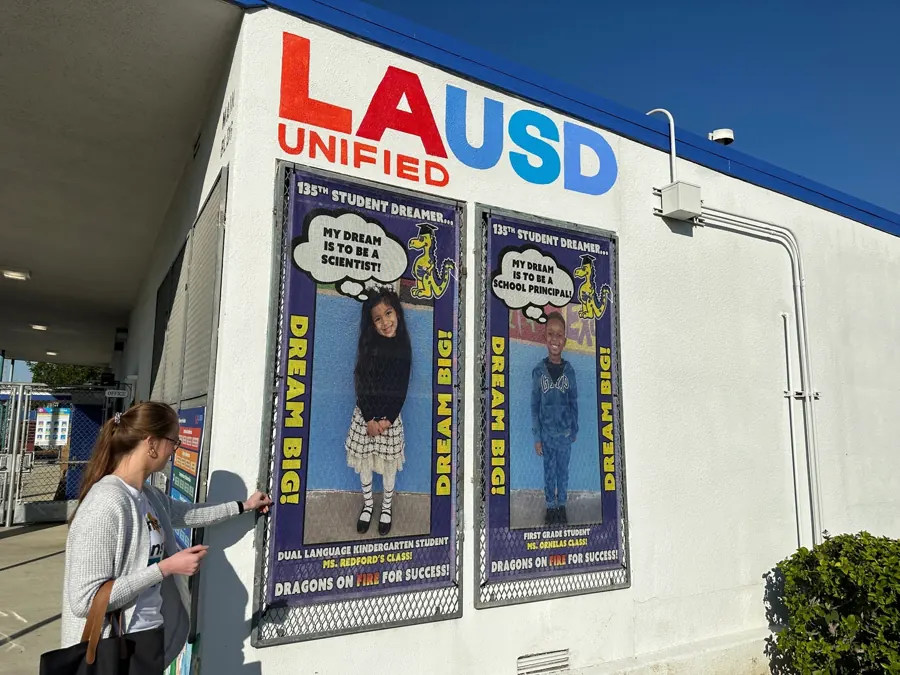
Most Principals who want a poster maker do not have a line item called "poster maker." The purchase gets funded from somewhere else, and which somewhere else determines how the request has to be written. This article covers the four routes schools most commonly use, what the federal rules actually say about allowable uses, and how to put a justification together that a business office will process. For the costs themselves, see what a school poster printer costs.
A note before the detail: nothing here is a determination of eligibility. Federal program funds are administered by your district, and only your district's federal programs office can tell you whether a specific purchase qualifies under your school's plan. What follows is the framework they will apply.
Title I: Schoolwide Versus Targeted Programs
Title I, Part A of the Elementary and Secondary Education Act is the largest federal K-12 funding stream, and how a school may spend it depends on which kind of program it runs.
Schoolwide programs. A school in which Title I funds may be used to upgrade the entire educational program for all students, under ESEA section 1114. Eligibility generally requires a poverty rate of at least 40 percent. In a schoolwide program, funds do not have to be tied to individually identified students, which gives considerably more latitude for building-level instructional investments.
Targeted assistance programs. Under ESEA section 1115, funds are used on allowable activities for students who are failing, or most at risk of failing, to meet state academic standards. The connection between a purchase and those students needs to be clearer.
For instructional materials, the practical difference matters. A schoolwide program can more readily support a resource used across the building; a targeted assistance school will need to show how the resource supports the identified student group.
What "Supplement, Not Supplant" Means
The supplement-not-supplant requirement in ESEA section 1118(b) prevents federal funds from replacing state and local money a school would otherwise have received.
Under the Every Student Succeeds Act, the way compliance is demonstrated changed in a way worth understanding. It is now a funding-methodology test rather than an expenditure-by-expenditure test. A district demonstrates that its method of allocating state and local funds gives each Title I school all the state and local money it would have received without Title I. The statute specifically says no district is required to identify that an individual cost supported with Title I funds is supplemental, or to deliver services through a particular instructional method or setting to show compliance.
In practice this means the question is usually not "is a poster maker supplemental?" in isolation. It is whether the district's allocation methodology is sound and whether the purchase is reasonable, necessary, allocable to the program, and properly documented. Those four words are the standard the business office is working to.
Title III: Materials for Multilingual Learners
Title III supports language instruction for English learners and immigrant students, including family and community engagement. Supplement-not-supplant applies here as well, under the Department of Education's Title III guidance.
Where a poster maker has a Title III argument, it usually runs through bilingual materials: instructional visuals produced in both English and the languages families speak, translated signage so that a building is navigable for parents who do not read English, and materials for family engagement events. The argument is stronger when the school can show the materials are actually being produced in those languages rather than simply that the equipment is capable of it.
Other Sources
Title IV-A, the Student Support and Academic Enrichment grant, supports well-rounded educational opportunities, safe and healthy students, and effective use of technology, and is used by some districts for instructional resources.
State and local instructional materials budgets are often the simplest route and carry none of the federal compliance overhead. Where a district has a per-pupil materials allocation or a technology refresh cycle, a poster maker may fit directly.
Grants from state agencies, education foundations, and local businesses are worth checking, particularly those aimed at literacy, family engagement, or school climate.
PTO and Booster Fundraising
A poster maker is unusual among school purchases in that it can generate revenue. Parent organizations have used systems of this kind to produce and sell:
- School-branded posters and spirit signs
- Magnets for cars and lockers
- Banners for teams, clubs, and performances
- Wrapping paper and seasonal items
- Senior and athlete recognition displays
The economics work because the marginal cost of a printed item is low relative to what families will pay for something personalized with their child's school, team, or name on it. A PTO that funds the machine in Year 1 often has a recurring fundraiser afterwards. PSS publishes a fundraising guide covering this approach.
Where the machine is bought with PTO funds, agree in advance who owns it, who maintains it, and how supplies get funded in later years.
Purchase Orders: How the Business Office Buys
Most school equipment is bought on a purchase order rather than a card, and vendors who sell into K-12 are set up for it. Rules and approval thresholds vary, but a common process looks like this:
- Vendor setup. The vendor is added as an approved supplier, which usually requires a W-9 and banking details.
- Quote. A formal written quote with itemized pricing, valid for a stated period.
- Requisition. The school submits a request against a budget code.
- Approval. Principal, then district, with a board threshold above a certain dollar amount in many districts.
- Purchase order issued. The vendor ships and invoices against the PO number.
- Payment terms. Net-30 or net-45 is standard, meaning payment is due according to the invoice terms, commonly 30 or 45 days from the invoice date.
Ask early about quote validity periods and whether the district has a bid threshold that would require multiple quotes or a cooperative purchasing contract.
PSS accepts standard district purchase orders with net-30 and net-45 terms for approved districts.
How to Write the Justification
The strongest requests connect the purchase to an outcome in the school improvement plan rather than to the equipment itself. A workable structure:
| Section | What to write |
|---|---|
| Need | The instructional or engagement problem, with evidence from your own data |
| Proposed use | What will be produced, how often, and for which students or families |
| Alignment | The goal in the school improvement plan or program plan this serves |
| Cost | Itemized quote, including supplies for the year |
| Alternative considered | Current outsourced spend and turnaround, with figures |
| Sustainability | How supplies will be funded in Year 2 and beyond |
The alternative-considered row does more work than Principals expect. A business office comparing a capital request against an existing recurring expense can see the trade directly, especially where current outsourced printing is running into thousands of dollars a year.
How PSS Supports Each Path
PSS K12 has sold to K-12 districts since 1994 and reports more than 2,900 schools using its systems. For each route above:
- Title I and Title III: PSS states that its systems and the Principal's Every-Wall Plan may qualify under Title I and Title III, and can provide documentation to support a justification. Whether a specific purchase qualifies is determined by your district's federal programs office.
- PTO fundraising: the Every-Wall Plan includes a fundraising guide covering posters, magnets, wrapping paper, and related items. The PSS Poster Maker System prints on magnetic media, peel-and-stick, vinyl, canvas, and wrapping paper as well as standard and premium paper.
- Purchase orders: standard net-30 and net-45 terms for approved districts, invoiced to the business office directly.
- Quotes: itemized quotes are available for a specific building, which is what a requisition requires.
Frequently asked questions
What can Title I funds be used for?
Title I, Part A funds support activities that help students meet state academic standards. In a schoolwide program under ESEA section 1114, generally a school at 40 percent poverty or above, funds may be used to upgrade the educational program for all students. In a targeted assistance program under section 1115, they support students failing or most at risk of failing to meet standards. Specific purchases must be reasonable, necessary, allocable, and documented, and your district's federal programs office makes the determination.
Can Title I money buy equipment like a poster maker?
It may, where the purchase supports the school's Title I plan and meets the reasonable, necessary, allocable, and documented standard. Equipment purchases often receive closer scrutiny than consumables, so the justification matters. Confirm with your district's federal programs office.
What does supplement, not supplant mean in practice?
That federal funds cannot replace state and local funds a school would otherwise have received. Under ESSA, compliance is shown through the district's funding methodology rather than by proving each individual cost is supplemental.
Can Title III funds be used for bilingual classroom materials?
Title III supports language instruction for English learners and family engagement, and districts use it for materials serving those purposes. Eligibility for a specific purchase is determined by the district.
How do purchase orders work for school equipment?
Typically the vendor is set up as an approved supplier, provides a written quote, the school submits a requisition, the district approves and issues a purchase order, and the vendor invoices against it on net-30 or net-45 terms. Thresholds and approval steps vary by district.
Sources
- U.S. Department of Education, Supplement Not Supplant Under Title I, Part A of the ESEA as amended by ESSA (non-regulatory guidance): https://www.ed.gov/sites/ed/files/2020/02/snsfinalguidance06192019.pdf
- U.S. Department of Education, Title I, Part A program page (schoolwide and targeted assistance programs, eligibility): https://www.ed.gov/grants-and-programs/formula-grants/k-12-students/title-i-part-a-improving-basic-programs-operated-by-state-and-local-educational-agencies
- U.S. Department of Education, supplement not supplant provision of Title III of the ESEA: https://www.ed.gov/media/document/supplefinalattach1doc-7569.doc
- U.S. Department of Education, ESSA supplement not supplant guidance summary: https://www2.ed.gov/policy/elsec/leg/essa/snstitleiguidance.pdf
- The Principal's Every-Wall Plan, funding paths and purchase order terms: https://everywall.pssk12.com
- Every-Wall Plan overview, funding section: https://everywall.pssk12.com/overview
- PSS Poster Maker System and materials: https://pssk12.com/poster-maker